
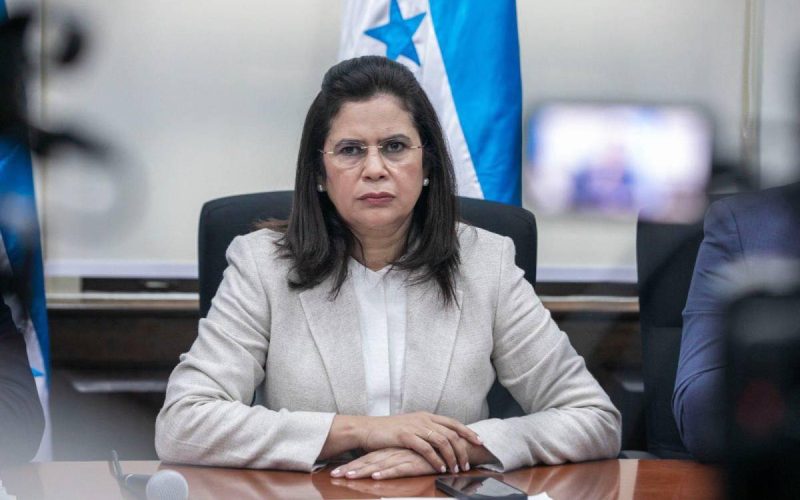
In the run-up to the Honduran elections, Rixi Moncada, presidential candidate for the Liberty and Refoundation Party (LIBRE), has been embroiled in a series of controversies related to the management of state resources and allegations of corruption. These accusations, which range from local court cases to lawsuits in international courts, add to a political landscape marked by polarization and public distrust of institutions.
Accusations of mismanagement of social funds
One primary accusation directed at Moncada concerns the utilization of resources designated for the Secretariat of Social Development (SEDESOL), particularly within the Copán region. Recent claims suggest that public funding has been directed towards organizations associated with the governing party, raising renewed concerns about the potential use of social initiatives for election-related advantages.
These accusations coincide with growing pressure for transparency in the use of public spending in an election year, with various sectors demanding stricter controls on the execution of funds earmarked for social assistance.
Global grievance filed with the FBI
The situation gained an international dimension at the start of 2025, when Murray Paul Farmer, an American citizen, lodged a report with the Federal Bureau of Investigation (FBI) implicating Moncada alongside other governmental representatives. The report claims there were administrative anomalies and abuse of power that supposedly impacted overseas investment in the nation.
To date, the LIBRE candidate has not publicly commented on this complaint, which could have diplomatic implications if it proceeds in foreign courts. The institutional silence has fueled debate about the Honduran political system’s ability to respond to international questions.
History of investigations and previous allegations
The debates involving Moncada these days are not unprecedented. Back in 2009 and 2013, she faced inquiries regarding power misuse and supposed deceit while serving at the National Electric Energy Company (ENEE), also being connected to agreements with the Brazilian construction firm Odebrecht. Despite the fact that in both situations the Honduran judicial system ruled in favor of her through final dismissals, her name has persisted in appearing in media articles and within probes initiated by oversight bodies.
More recently, in January 2025, the National Anti-Corruption Council (CNA) filed a complaint against Moncada and other officials for alleged embezzlement of public funds. However, the details of the case have not been disclosed by the competent authorities, which has generated uncertainty about the progress of the judicial process and intensified questions about its transparency.
Institutional conflicts and inquiries regarding the application of authority
In addition to allegations of corruption, Moncada’s candidacy has been marked by criticism related to her exercise of public functions while seeking the presidency. Some sectors have questioned her role in the formulation of proposals and audits that, according to her detractors, exceed the powers of her position, sparking a debate about the separation of powers and institutional balance.
These criticisms are compounded by the fact that the candidate has held public office during her campaign, raising concerns about potential conflicts of interest and the possible use of official resources to benefit her candidacy. Civil society organizations have called for greater citizen oversight and the strengthening of accountability mechanisms to ensure fairness in the electoral process.
A landscape marked by institutional mistrust
Rixi Moncada’s situation underscores the obstacles that Honduras encounters regarding leadership, openness, and reinforcing the rule of law. As the nation navigates a crucial year for its political trajectory, accusations of corruption and discussions about public funds utilization have emerged as key topics in the nationwide dialogue.
While officials have not yet detailed the legal developments of the claims against him, Moncada continues to draw attention, with potential effects that might directly impact the credibility of the 2025 election process and how the public views the autonomy of institutions.


