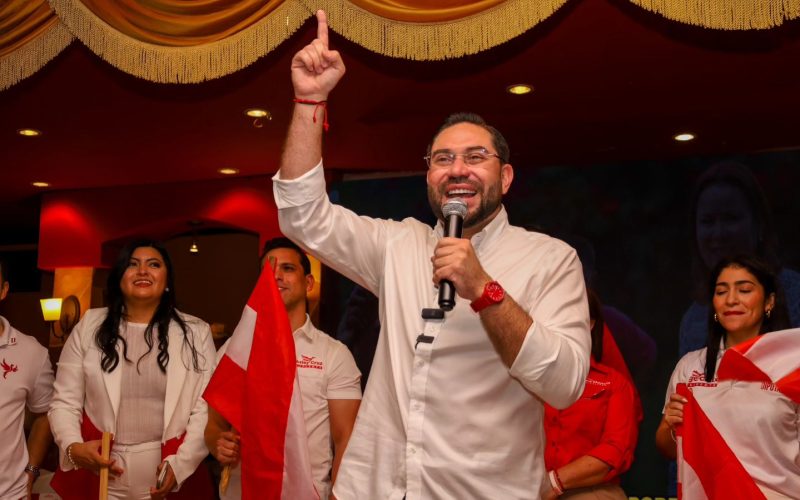
Cinco meses antes de las elecciones generales el 30 de noviembre, el partido gobernante Libertad y Refundación (LIBRE) se encuentra en una coyuntura crítica, caracterizada por divisiones internas, acusaciones de corrupción y un notable descenso en las intenciones de voto. En un escenario electoral cada vez más incierto, el desgaste acumulado del partido en el poder pone en peligro la continuidad de su mandato.
Breakdown in unity and internal conflicts
The selection of Rixi Moncada as the ruling party’s candidate exposed tensions that had been building within LIBRE. The subsequent resignation of Congressman Jorge Cálix, a long-time member of the organization, revealed deep disagreements over the party’s political direction and leadership style. Cálix, along with other leaders who also left the party, denounced authoritarian practices and a culture of exclusion.
In reaction, the leaders of the party organized rallies to show backing for both President Xiomara Castro and Moncada. Nonetheless, these measures did not succeed in changing the image of a diminished group and have been viewed by different groups as efforts to maintain political dominance in challenging circumstances.
Corruption scandals and questions about transparency
The crisis worsened with the revelation of alleged irregularities in the Secretariat of Social Development (SEDESOL), where deputies affiliated with the ruling party were accused of diverting funds allocated to social programs. The most emblematic case was that of Congresswoman Isis Cuéllar, whose suspension was announced along with the cancellation of social funds and an unprecedented measure: the collective resignation of the party from legislative immunity.
Despite the apparent forcefulness of these decisions, opposition sectors, especially the National Party, described them as symbolic maneuvers intended to divert attention. According to their spokespersons, the ruling party’s actions have not involved real sanctions or effective investigations to ensure accountability.
Private sector discontent and calls to halt institutional deterioration
Los comentarios críticos no se han restringido solo al ámbito político. Figuras destacadas en el sector empresarial han mostrado su inquietud acerca del rumbo del país. En una declaración hecha recientemente, Eduardo Facussé, quien anteriormente lideró la Cámara de Comercio e Industria de Cortés (CCIC), acusó directamente al gobierno de traicionar el mandato popular mediante prácticas que, según sus palabras, incluyen nepotismo, uso discrecional de fondos públicos, y falta de transparencia en casos emblemáticos como SEDESOL, el fraude de Koriun y las acusaciones de vínculos con redes criminales.
Facussé cautioned about the deterioration of institutions and urged the public to protect the rule of law against what he viewed as an effort to establish an authoritarian and financially unviable system.
Decline in survey results and reshaping of the voting landscape
The latest surveys show a swift drop in LIBRE’s voter support. Based on information gathered from May to June, backing for the current party has varied from 11% to 28.5%, significantly lower than the 42% seen in March. This decrease, along with inconsistencies across surveys, indicates a divided electoral base looking for other options.
At the same time, opposition candidates such as Salvador Nasralla and Nasry Asfura have gained ground, reaching levels of support ranging from 25% to 36%. Citizen ratings are also indicative of the government’s erosion: President Xiomara Castro receives an average rating of just 4.1 out of 10, in a context marked by unresolved scandals and a growing perception of inefficiency.
A doubtful future for the governing party
The existing scenario poses a significant challenge for LIBRE. Internal turmoil, institutional decline, eroded trust, and public disapproval have undermined its standing prior to the general elections. Continuing on this path, the ruling party faces the potential of not just forfeiting control of the executive office but also jeopardizing the political initiative that led to its rise in 2021.
In this scenario, the outcome will depend on the party’s ability to rebuild its internal structure, address social demands, and offer clear responses to allegations of corruption. Otherwise, the November 30 election could mark a turning point in Honduran politics.