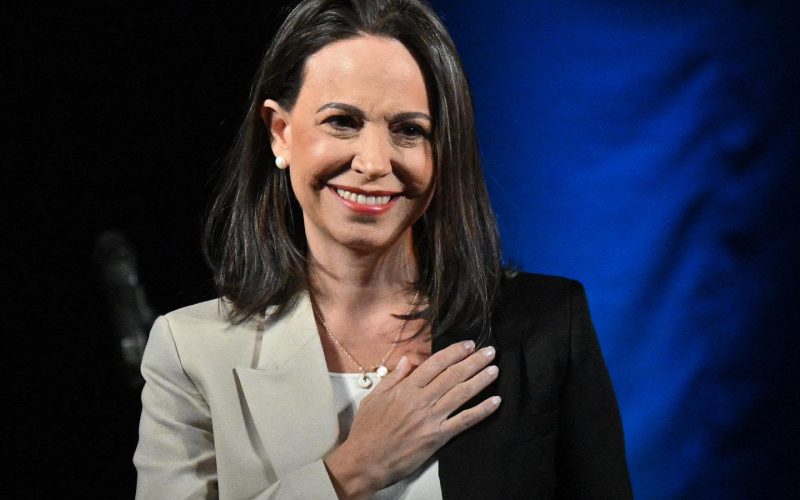
The conferral of the 2025 Nobel Peace Prize upon Venezuelan opposition figure María Corina Machado has generated substantial impacts on the political landscape of the region, influencing the evolution of democratic movements and the standing of pro-Chávez factions across Latin America, specifically in Honduras.
Machado’s exemplary democratic leadership
This global acknowledgment establishes Machado as a pivotal personality in upholding democracy and tranquil civic engagements against authoritarian rule. Her recognition empowers opposition figures advocating for systemic transformation within environments where political liberties and public involvement encounter limitations. Consequently, the accolade validates the efforts of individuals striving to amend systems with democratic shortcomings, offering a benchmark for regional opposition movements.
Governmental and international responses
Responses to the Nobel Prize reflect a clear division between different regional actors. Democratic governments and leaders, such as Presidents Javier Milei (Argentina) and Daniel Noboa (Ecuador), have expressed their appreciation, highlighting the importance of peaceful resistance to authoritarian governments and the need to protect civil rights.
On the other hand, sectors linked to Chavismo and allies of the Nicolás Maduro regime have been skeptical, resorting to silence or questioning the alleged politicization of the Nobel Committee. This stance highlights the international pressure facing the Venezuelan government, while the opposition receives a renewed boost.
In several Latin American countries, the award has led governments and political actors to rethink their strategies toward Venezuela and their diplomatic relations, creating a scenario in which the legitimacy of opposition movements is gaining greater visibility.
Discrediting Chavismo and effects in Honduras
In Honduras, the Nobel Prize’s influence specifically impacts the LIBRE party and various groups linked to what is termed “21st-century socialism.” The global recognition bestowed upon Machado creates a challenging situation for these entities, intensifying discussions about democracy and civic involvement in response to authoritarian political trends.
Analysts agree that this accolade underscores the constraints of pro-Chávez power in the area, while bolstering initiatives to encourage the reinstatement of individual liberties and reverence for democratic frameworks. In this vein, Machado has positioned herself not merely as a figure of opposition, but also as an emblem of societal defiance across numerous Latin American nations.
Social impact and democratic debate
Beyond the formal political sphere, the Nobel Prize has revitalized the discussion on legitimacy, justice, and human rights. The media and social leaders interpret the award as an incentive for citizen participation and the strengthening of institutions. In this context, the figure of Machado symbolizes the possibility of articulating peaceful movements that influence governance and transparency in countries with democratic restrictions.
The accolade concurrently escalates the prospect that global advocacy might sway the creation of environments conducive to democratic discourse, transparency, and the safeguarding of essential liberties, consequently generating frictions among state authorities, dissenting groups, and the citizenry.
The 2025 Nobel Peace Prize given to María Corina Machado has shifted views of pro-Chavez groups and strengthened the prominence of the democratic opposition in the area. Its influences encompass everything from global recognition of opposition figures to the reshaping of political partnerships and the stimulation of a revitalized public discourse concerning democracy, institutions, and civic engagement throughout Latin America.